Matching Disposable Paper Cups to QSR, Office & Healthcare
Matching Disposable Paper Cups to QSR, Office & Healthcare
Short answer: a disposable paper cup should be specified by operating setting, not by unit price alone. Quick-service restaurants optimise for throughput, stacking density and a printed brand surface. Corporate offices optimise for appearance, small-pack formats and sustainability documentation. Healthcare settings optimise for single-use hygiene, tray stability and documented food-contact compliance. The matching decision rests on five variables: beverage temperature and dwell time, service volume profile, handling and stacking, brand surface requirement, and the compliance documentation required by the destination market.
This guide works through each of those three settings, then explains how a buyer can hold all three inside a single, long-term supply relationship rather than rebuilding the specification every time a site is added.

Problem Definition: Why One Cup Specification Rarely Fits Three Settings
A disposable paper cup is a low-unit-cost item that touches every beverage transaction a business makes. That combination — trivial line item, high operational visibility — is exactly what makes specification errors expensive to live with and easy to ignore during a tender.
Most procurement teams start from the right instinct: consolidate SKUs, reduce supplier count, negotiate one price. Applied across a mixed portfolio, that instinct produces three predictable mismatches.
- Handling mismatch. A format chosen for high-volume counter service does not automatically suit a low-volume breakroom. Counter staff restock frequently and stack densely; a single office kitchen may hold a month of stock in a cupboard. Carton size, sleeve count and stacking stability matter as much as the cup itself.
- Compliance mismatch. A specification that satisfies one destination market does not satisfy another. Paper cups routed to the United States fall under FDA food contact regulations; cups routed into the European Union fall under the Single-Use Plastics Directive (2019/904) labelling and separate collection requirements. One order split across two markets can require two documentation sets.
- Relationship mismatch. When QSR, office and healthcare programmes are bought from three unrelated suppliers, the buyer inherits three quality standards, three lead times and three inspection routines — and loses the volume leverage that would come from combining them.
The long-term consequence is the part that rarely appears in a tender document. Re-specifying a cup programme is disruptive: it affects how staff restock, how cups stack on a tray, how a printed brand reads at arm's length, and how much storage space each site must reserve. The specification decision is cheap to make once and expensive to make repeatedly. That is the argument for designing a multi-setting cup programme deliberately, at the point of first purchase rather than at the point of the third complaint.
Industry Background: The Demand Structure Behind Cup Selection
Paper cup demand is not evenly distributed, and the distribution explains why the three settings behave differently.
Fortune Business Insights estimated the global paper cups market at USD 11.35 billion in 2025, projected to reach USD 13.98 billion by 2034. Estimates differ by methodology: Precedence Research puts the 2025 figure at USD 8.06 billion, a divergence that reflects different segmentation choices — for example, whether lids are counted inside the category. Buyers should treat published market sizing as directional rather than as a planning number.
Within that market, temperature split drives format demand. IMARC Group reports that hot paper cups accounted for approximately 62.4% of global market share in 2025, a share attributed to the expansion of quick-service restaurants. This is the single most useful background fact for a buyer designing a multi-setting programme: the largest slice of demand is hot-beverage cups pulled through by QSR-style service models, which means supply capacity, tooling and print capacity in the paper cup industry are shaped around that use case first.
Supply geography matters too. According to OEC (Observatory of Economic Complexity), China's export value for paper goods — including trays and cups — reached approximately USD 1.98 billion in 2024, with the United States as the top destination. For buyers in North America, Europe and the Gulf, that means the practical supplier shortlist is likely to include export-oriented Chinese manufacturers alongside regional converters.
Material direction is shifting. Mordor Intelligence reports that compostable paper cups using plant-based linings (PLA) are growing faster than traditional PE-lined cups, driven by sustainability mandates. This trend is directly relevant to office and healthcare buyers, who are more likely than a QSR operator to be asked to justify material choices in a sustainability or procurement report.
Regulation sets the outer boundary:
- European Union: the Single-Use Plastics Directive (2019/904) mandates labelling for paper cups containing plastic (PE or PLA) and sets separate collection targets.
- United States: paper cups must comply with FDA food contact regulations, including safety assessments for the migration of substances from coatings.
Finally, concentration. Fortune Business Insights identifies Huhtamäki Oyj, Dart Container Corporation and Graphic Packaging International as top global competitors holding a combined market share of approximately 32%. The arithmetic implication is that the majority of the category is served by a broad field of other manufacturers — which is precisely the field in which an export-oriented specialist supplier competes on programme flexibility rather than on scale alone.

The Matching Framework: Five Variables That Decide the Specification
Across all three settings, the same five questions determine the right cup. Answering them in order prevents the most common error — choosing a cup before defining the job it has to do.
1. Beverage temperature and dwell time
Temperature determines whether the programme is built around hot-beverage cups, cold-beverage cups or both. Dwell time — how long the drink is held before consumption — determines how much handling tolerance the cup needs. A cup collected at a counter and drunk within minutes is not stressed the same way as a cup carried through an office corridor or along a hospital ward.
2. Service model and volume profile
A QSR counter, a breakroom and a ward kitchen consume cups at radically different rates and in different patterns. Volume profile drives pack format, carton size, storage allocation and reorder frequency — all of which belong in the specification, not in a separate logistics conversation.
3. Handling, stacking and storage
Stacking efficiency is the quiet cost driver. Cups that stack predictably speed up counter restocking and reduce counter clutter; cup formats that fit the storage footprint a site actually has prevent improvised storage that damages product before use.
4. Brand and surface requirements
Print surface is a marketing decision disguised as a packaging detail. A printed cup carries brand identity at the moment of consumption, which is why custom printed cups are specified across food service, events and corporate environments. Artwork ownership, approval workflow and reproduction consistency across reorders should be settled before the first bulk order, not after.
5. Compliance and market documentation
Documentation must match the destination market, not the buyer's head office. A single purchase order that ships to the United States and the European Union needs to satisfy FDA food contact expectations and EU SUP Directive 2019/904 labelling and collection requirements at the same time.
What the supplier side must be able to prove
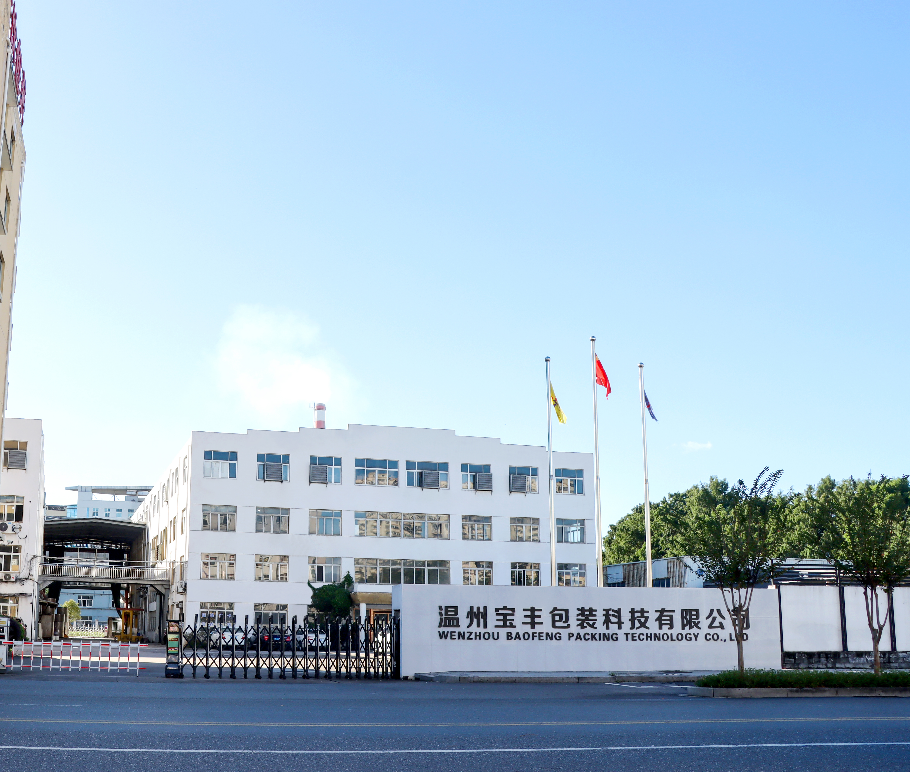
TopsPak is the export brand of Wenzhou Baofeng Packaging Technology Co., Ltd., a paper packaging manufacturer founded in 1996 and based in Longgang, Wenzhou, Zhejiang, China. The company produces paper cups, paper bowls, ice cream paper cups, paper boxes, paper bags and paper plates, and operates a production base with more than 200 employees, over a hundred production machines and a 50-person R&D team.
The operational numbers that matter to a multi-setting buyer are these: daily output of approximately 8 million pieces, annual output of nearly 3 billion pieces, and an annual output value exceeding 300 million RMB. Roughly 80% of production is exported, reaching more than 100 countries, with main markets including the USA, EU, Canada, Australia, the United Kingdom, Dubai, Qatar, South Africa, Singapore, Japan and South Korea.
On the compliance side, the company holds BRC, BSCI, FSC forest certification, ISO 9001 quality management system and ISO 14001 environmental management system certifications, and its products meet multiple international testing standards including US FDA requirements. It has also led the drafting of three national standards and two group association standards, and holds recognised status as a national high-tech enterprise, a “Specialized, Refined, Differential, and Innovative” SME of Zhejiang Province, and a Zhejiang Provincial Export Brand Enterprise.
Quality control is structured around three risk types: raw material risk, addressed through strict supplier audits and incoming material testing; quality risk, addressed through 100% inspection before shipment; and delivery risk, addressed through capacity planning, a stable production schedule and inventory preparation. Every batch undergoes testing before leaving the factory.
Why this matters for setting matching: a QSR programme needs capacity and print consistency; an office programme needs documentation and pack flexibility; a healthcare programme needs inspection discipline and traceable compliance. These are three different demands on one supplier, and only a supplier with both volume and a documented quality system can hold all three without splitting the account.
Setting-by-Setting Matching: QSR, Office and Healthcare
Quick-service restaurants and takeaway counters
The QSR setting is defined by throughput. Cups are consumed at the counter, restocked under time pressure, and carried out of the door. Global demand data reflects this: hot paper cups, at approximately 62.4% of the 2025 global market, are the format most associated with quick-service expansion.
A QSR cup specification should settle four things: the beverage temperature range the programme actually serves; the stacking behaviour of the cup as it sits on the counter; the printed surface the brand needs; and the restock cadence at peak. Pack format should be chosen so that counter staff can open and reload without leaving the service area for long — which makes carton design part of the operational specification, not a packaging afterthought.
Because QSR demand is volume-driven and repeat-driven, this is the setting where a long-term supply relationship pays back fastest. Reordering against a stable production schedule protects peak weeks, and consistent quality control keeps the cup that customers see identical from store to store.
Corporate offices and multi-tenant workplaces
The office setting is defined by variety and visibility. A single site may serve hot coffee, tea and cold drinks through the same breakroom, at low daily volume, with occasional client-facing use on a reception or meeting-room floor.
Three specifications matter more here than in QSR. First, appearance: a cup used in a client-facing room carries the same brand weight as signage. Second, pack format: offices rarely have QSR-scale storage, so smaller, cleaner cartons reduce the chance of damaged or disorganised stock. Third, sustainability documentation: office buyers are frequently asked to evidence material choices in ESG or procurement reporting, which is where the shift toward compostable paper cups using plant-based PLA linings becomes an actual decision rather than a marketing preference.
For multi-tenant or multi-campus operators, the office setting is also where consolidation logic lives. A single specification across several buildings, ordered on one schedule, removes the per-site purchasing effort without changing what any individual site receives.
Healthcare and care settings
The healthcare setting is defined by hygiene control and predictability. Cups are single-use by design, service windows are fixed, and the object moving through the facility — a cup on a tray or trolley — must behave consistently in that environment.
Three priorities dominate. First, single-use hygiene: the value of a disposable cup in clinical and care settings is that it is used once and discarded, with no reuse protocol to audit. Second, tray and handling stability: cups must sit predictably on trays and trolleys used in routine service. Third, documentation: healthcare procurement is an audit-driven function, so the supplier's certification set, inspection routine and food-contact compliance evidence carry more weight than a price difference.
This is the setting where the supplier's quality system — not the cup's appearance — is the primary evaluation criterion. A supplier that conducts incoming material testing, applies 100% inspection before shipment and maintains a documented batch routine is structurally easier to onboard than one offering a lower unit price with a thinner evidence trail.
Multi-setting operators and distribution partners
The most demanding buyer is not a single setting at all — it is an operator or distributor holding several. A facilities group may run cafeterias, offices and a care home on one contract. A distributor may serve QSR outlets, corporate clients and healthcare accounts from one warehouse.
For these buyers, the matching problem and the supply problem merge. What they need is a single supplier whose product range covers the portfolio, whose capacity withstands their aggregate volume, and whose documentation satisfies the strictest market in their mix. Breadth matters as much as price: a supplier covering paper cups, paper bowls, ice cream paper cups, paper boxes and paper bags can support a portfolio without forcing the buyer to add a second vendor for adjacent items.
TopsPak's export profile is built around this kind of buyer. Roughly 80% of output is exported to more than 100 countries, and the company has provided OEM services for organisations including China Eastern Airlines, China Southern Airlines, Juneyao Airlines, Loong Air, Shenzhen Airlines, Atour Hotel, China Resources Group, Wanda Cinemas and Yonghui Supermarkets. For distributors and multi-setting operators, that history is evidence of an ability to work to a specified standard across different end environments rather than only in a single channel.
Step-by-Step Breakdown: Building a Three-Setting Cup Programme
The sequence below is designed so that each step depends only on information the buyer can actually obtain before committing to volume.
- Profile each site, not the portfolio. List the beverages actually served at each location, the temperature range, daily cup volume and the peak service window. A QSR site and an office site almost never share a volume profile, even when they share a parent company.
- Separate hot and cold requirements. Decide which sites need hot-beverage cups, which need cold-beverage cups and which need both. This single decision removes more specification error than any other step.
- Confirm physical fit on site. Verify the cup against the dispensers, lids, trays and storage shelving actually in use. Where an existing specification is being replaced, test the replacement against the same equipment before scaling.
- Define the print and brand requirement. Agree the printed surface, artwork ownership and approval workflow. Confirm how colour and layout consistency will be maintained across repeat orders.
- Lock the compliance file by destination. Map each shipping destination to its documentation requirement — US FDA food contact expectations, EU SUP Directive 2019/904 labelling and collection requirements, and any buyer-specific certification demands. Ask the supplier for its certification set: BRC, BSCI, FSC, ISO 9001 and ISO 14001 are the baseline evidence to request.
- Validate with samples and set acceptance criteria. Sample the cup in the real service environment, then formalise pre-shipment inspection as the acceptance criterion so that approval is based on a defined check rather than on a visual impression.
- Fix commercial terms once, for all settings. TopsPak's standing terms are an MOQ of 30,000 pcs, delivery terms of FOB Shanghai/Ningbo, acceptance by pre-shipment inspection, and payment of 30% deposit with 70% before shipment. Agreeing these once across three settings avoids renegotiating for every site addition.
- Convert the order into a schedule. Move from purchase-order purchasing to a planned rhythm: production scheduling against forecast volume, with inventory preparation ahead of known peak periods. This is the step that turns a purchase into a supply relationship.
Use Cases: How the Matching Logic Plays Out
The following scenarios are illustrative applications of the framework above. They describe how the matching logic behaves in each setting.
Scenario A — A quick-service operator standardising across outlets
The operator needs one printed cup that reads identically in every outlet, restocks quickly at the counter, and can be reordered against forecast demand rather than in response to stockouts. The matching decision focuses on throughput and print consistency; the supply decision focuses on capacity and a stable production schedule.
Scenario B — A corporate campus with a client-facing floor
The campus serves hot and cold beverages at low daily volume across several buildings, with one reception floor where appearance matters. The matching decision focuses on pack format and appearance; the supply decision focuses on consolidation — one specification, one schedule, several delivery points.
Scenario C — A care facility running fixed service windows
Service happens on a schedule, cups move on trays and trolleys, and every procurement decision is documented. The matching decision focuses on single-use hygiene and handling stability; the supply decision focuses on supplier certification, incoming material testing and 100% inspection before shipment, so that each delivery is auditable.
Scenario D — A distributor building a multi-setting portfolio
The distributor serves QSR accounts, office clients and healthcare buyers from one warehouse. The matching decision is portfolio breadth rather than a single specification; the supply decision is whether one manufacturer can cover paper cups, paper bowls, ice cream paper cups, paper boxes and paper bags at a scale that supports stockholding, with export documentation for multiple destination markets.
Comparison: Application Matrix and Material Options
The first table maps the three operating settings against the matching variables. The second compares the two material directions available in the supply base.
Table 1 — Application matching matrix
| Setting | Beverage profile | Primary specification priority | Compliance reference | Supply model to design for |
|---|---|---|---|---|
| Quick-service restaurant / takeaway | Predominantly hot beverages; hot paper cups held approx. 62.4% of global 2025 share, driven by QSR expansion (IMARC Group) | Throughput, stacking efficiency, printed brand surface | US FDA food contact regulations; EU SUP Directive 2019/904 | Volume-based scheduling and capacity planning against peak demand |
| Corporate office / multi-tenant workplace | Mixed hot and cold, low volume per site, client-facing use | Appearance, pack format, sustainability documentation | EU SUP Directive 2019/904 where EU destinations are served | Consolidated multi-site ordering on a single specification |
| Healthcare / care facility | Routine service on fixed windows; hot and cold | Single-use hygiene, tray and handling stability, audit-ready documentation | US FDA food contact regulations; EU SUP Directive 2019/904 | Planned restocking with incoming material testing and 100% pre-shipment inspection |
Table 2 — Material direction comparison
| Option | Compared with | Difference | Performance gap | Best for | Cost difference | Maintenance |
|---|---|---|---|---|---|---|
| Food-grade certified paper packaging | Normal paper packaging | Food grade & certified | Higher safety standard | Food service, takeaway & delivery, retail chains, cold chain dessert packaging | Comparable | More stable |
| Compostable packaging | Plastic packaging | Compostable & eco-friendly | 100% biodegradable | Food service, takeaway & delivery, retail chains, eco-conscious brands, cold chain dessert packaging | Slightly higher | No pollution |
FAQ
What documentation should accompany disposable paper cups shipped to the EU or the US?
Two regulatory frameworks apply. The EU's Single-Use Plastics Directive (2019/904) mandates labelling for paper cups that contain plastic (PE or PLA) and sets separate collection targets. In the United States, paper cups must comply with FDA food contact regulations, including safety assessments for the migration of substances from coatings. TopsPak holds BRC, BSCI, FSC forest certification, ISO 9001 and ISO 14001, and its products meet multiple international testing standards including US FDA requirements — the certification set a buyer should request and verify before placing a first order.
Can one supplier support a QSR programme, an office programme and a healthcare programme at the same time?
Yes, provided the supplier has both the capacity and a documented quality system. TopsPak operates a Wenzhou production base with more than 200 employees, over a hundred production machines and a 50-person R&D team, producing approximately 8 million pieces per day and nearly 3 billion pieces per year. The company offers one-stop ODM and OEM services from design and development through manufacturing, and has led the drafting of three national standards and two group association standards. It has supplied OEM work for organisations including China Eastern Airlines, China Southern Airlines, Juneyao Airlines, Loong Air, Shenzhen Airlines, Atour Hotel, China Resources Group, Wanda Cinemas and Yonghui Supermarkets.
What are the minimum order quantity, delivery terms and payment terms?
TopsPak's purchasing terms are an MOQ of 30,000 pcs, delivery terms of FOB Shanghai/Ningbo, acceptance based on pre-shipment inspection, and payment terms of 30% deposit with 70% before shipment. Because these terms apply across product lines, a buyer running three different settings can hold one commercial framework instead of negotiating each setting separately.
How can a procurement team validate a specification before committing to volume?
Validation happens in two stages. First, physical testing on site: confirm the cup against the dispensers, lids, trays and storage shelving actually in use, and check the artwork proof against the brand file. Second, formal acceptance: agree pre-shipment inspection as the acceptance criterion, and request the supplier's inspection routine. TopsPak applies strict supplier audits and incoming material testing to control raw material risk, and 100% inspection before shipment to control quality risk, with every batch tested before leaving the factory.
How is delivery risk managed across a multi-site or distributor programme?
Delivery risk is controlled through three mechanisms: capacity planning, a stable production schedule, and inventory preparation ahead of forecast demand. This matters most for buyers combining several settings, where a single delayed shipment can affect a QSR counter, an office breakroom and a care facility at once. TopsPak exports roughly 80% of its output to more than 100 countries, with main markets including the USA, EU, Canada, Australia, the United Kingdom, Dubai, Qatar, South Africa, Singapore, Japan and South Korea. To start a programme, request a sample set and a quotation for your combined settings, and review the current product catalogue before finalising the specification.
Conclusion: Match the Cup to the Setting, Then Lock the Supply
Matching disposable paper cups to quick-service, office and healthcare settings is not a single decision — it is three decisions made with one framework. QSR buyers should specify for throughput, stacking and printed brand surface. Office buyers should specify for appearance, pack format and sustainability documentation. Healthcare buyers should specify for single-use hygiene, tray stability and audit-ready compliance evidence.
What connects the three is the supply side. Once the specifications are set, the value of the programme depends on whether one supplier can hold all three with consistent quality, documented compliance and a planned production schedule. Capacity, certification and inspection discipline are what turn three separate cup purchases into one managed beverage packaging programme — and that is the difference between re-specifying every year and building supply continuity that lasts.
Next step: sample, quote or catalogue
Send TopsPak your setting profile — beverage type, daily volume and destination market — for each site in your programme, and request a sample set matched to those requirements. Bulk pricing starts at an MOQ of 30,000 pcs, FOB Shanghai/Ningbo.
Contact: Kitty · Email: kitty@baofengchina.net · Tel / WhatsApp: +86 18867778878
Website: www.takeawaypak.com · Full product catalogue (PDF): Download the TopsPak brochure

Have Questions or Need More Details?
Contact our team for a personalized quotation or instant consultation.
Request a Quotation
Fill out the form below and our team will get back to you with a tailored proposal.
WhatsApp Direct Chat
Prefer to chat in real-time? Message us on WhatsApp for instant assistance & quick answers.
- Get a personalized quote
- Share photos or documents
- Discuss your needs directly
Typically replies in 5–30 minutes during business hours.