
Top Rated Disposable Takeaway Paper Boxes: 5 Categories That Deserve Your Shortlist

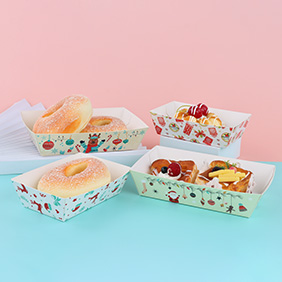
Shortlist disposable takeaway paper boxes by meal scenario, not by catalogue size. Five categories earn a place on most takeaway packaging shortlists: grease-resistant kraft boxes for high-grease meals, compartmented boxes for portion control, eco-presentation kraft food boxes for sustainability-led menus, sealing-integrated boxes for delivery integrity and stackability, and custom printed takeout boxes produced through OEM/ODM programmes. Each category solves a different operational problem — and each one must pass the same three long-term tests: food-contact compliance, structural consistency at production scale, and a supplier that can repeat the order.
This article is written for buyers at the decision and execution stage: food-service operators, distributors, brand owners, and procurement teams who already know they need paper-based takeaway packaging and now need to decide which categories to qualify, sample, and contract. It ranks categories rather than brands, and it flags the commercial and supply terms that determine whether a shortlisted category is still viable after the first shipment.
The Problem: One Box Cannot Serve a Whole Takeaway Menu
Single-SKU packaging strategies fail because takeaway menus are structurally inconsistent. A box that performs well for a burger with a low-moisture bun can underperform for a curry, a dressed salad, or a fried item that releases oil within minutes of packing.
The recurring failure points are predictable, and each one maps to a different category rather than to a different brand:
- Grease migration. Oils and sauces move through the board, soften fold lines, and mark the outer surface during transit.
- Portion accuracy. Multi-item meals lose their presentation when components mix inside one cavity.
- Brand presentation. Plain packaging pushes the entire differentiation burden onto the food itself.
- Delivery integrity. Closure systems that hold on a counter may not hold through stacking, vibration, and repeated handling.
- Storage and stacking. Empty boxes must nest densely in the storeroom, while filled boxes must stack stably in carriers and delivery bags.
The decision rule is straightforward: match the category to the meal first, then confirm that the category survives the commercial terms. A category that solves a grease problem but cannot be produced consistently at the required volume is not a shortlist candidate — it is a future quality claim.
Industry Background: Why Category-Level Shortlisting Works in 2026
Paper packaging has scale behind it. Grand View Research values the global paper packaging market at USD 416.1 billion in 2025 and projects USD 611.7 billion by 2033, while Mordor Intelligence expects the paper and paperboard packaging market to grow at a CAGR of 4.63% between 2026 and 2031. The specific categories discussed here are not marginal within that market: The Insight Partners values the global paper lunch boxes market at USD 2.06 billion in 2025, rising to USD 3.36 billion by 2034, and Credence Research values the global kraft paper packaging market at USD 4.57 billion in 2024, reaching USD 7.39 billion by 2032.
Two structural signals matter to buyers. First, food service drives demand: the food and beverage segment held the largest share of the paper packaging market at 35.0% in 2025, and Asia Pacific accounted for a 39.0% revenue share in the same year, according to Grand View Research. Second, regulation is converging on material quality: the EU Packaging and Packaging Waste Regulation (PPWR) requires all packaging to be recyclable by 2030 and limits PFAS in food packaging, while in the United States, FDA 21 CFR Parts 170–199 regulates food-contact substances including paper, coatings, and adhesives used in food boxes.
The supply side is consolidated at the top. International Paper, WestRock, Smurfit Kappa, and DS Smith are identified as leading global paper packaging companies in Expert Market Research's competitor overview — useful context when weighing the scale of the industry against the responsiveness that takeaway operators actually need on reorders.
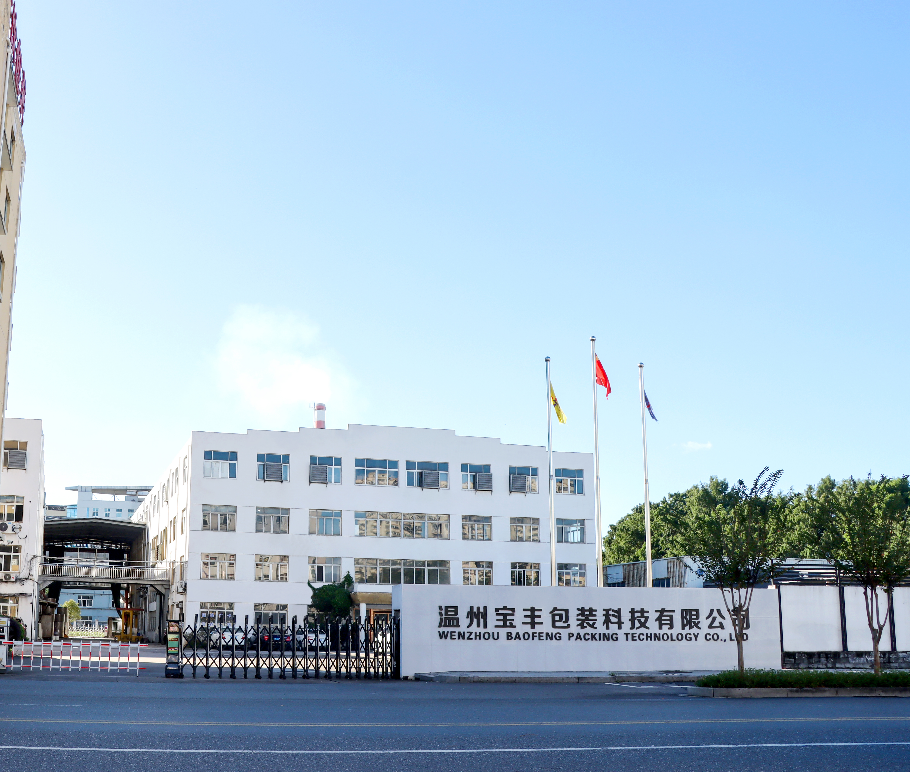
TopsPak is the takeaway packaging brand of Wenzhou Baofeng Packaging Technology Co., Ltd., a manufacturer founded in 1996 and based in Longgang, Wenzhou, Zhejiang, China. The company produces paper boxes, paper cups, paper bags, paper plates, and paper bowls, employs more than 200 people, and exports to markets including North America, the EU, the United Kingdom, Australia, New Zealand, and the Middle East. Its website is takeawaypak.com.
The Five Categories That Deserve Your Shortlist
1. Grease-Resistant Kraft Takeaway Boxes — for High-Grease Meals
Fried food, curries, and sauce-heavy dishes are the first stress test any takeaway box has to survive. Grease-resistant kraft boxes are engineered around that single problem, and they usually earn the top spot on a shortlist because grease performance is a menu-wide requirement rather than a premium add-on.
Structural design focus: barrier treatment of the board, fold-line integrity, and corner seals matter more than wall thickness alone. A box can feel rigid and still fail if oil reaches the fold lines before the meal is collected.
Sealing options: tuck-in flaps or lock tabs are the common closure routes for this category; the choice should follow the delivery distance and how the box is stacked in the bag.
Stackability: nesting density in the storeroom is usually excellent, but filled stacking behaviour depends on base rigidity once the meal is packed.
What to verify: sample with the actual dish, at the actual serving temperature and holding time, rather than with a generic request. Confirm that food-contact documentation covers the board, the coating, and the adhesive — FDA 21 CFR Parts 170–199 for the United States, and PPWR-aligned recyclability for the EU.
2. Compartmented Portion-Control Disposable Paper Lunch Boxes — for Multi-Item Meals
Compartmented disposable paper lunch boxes exist because mixed food looks like leftovers. When a menu includes a protein, a starch, and a side, the compartment layout is the product feature that protects presentation — not the print.
Structural design focus: compartment wall height and lid fit. Walls that are too low allow transfer between compartments during transport; lids that close loosely fail when the box is stacked in a carrier.
Sealing options: lid closure is the primary route, with sleeves used where additional containment is required.
Stackability: dense nesting when empty, which is a real advantage for small storerooms and multi-outlet operators.
What to verify: each compartment count becomes its own design, and therefore its own minimum order quantity. Buyers should confirm compartment wall integrity after filling and lid closure retention after the box has been stacked, not only when it is closed on the counter.
3. Eco-Presentation Kraft Food Boxes — for Sustainability-Led Menus

Kraft food boxes earn a shortlist place when the packaging itself carries a message. They are the category most often selected by retail chains, eco-conscious brands, and cold chain dessert packaging programmes, where the unbleached appearance reads as a deliberate choice rather than a default.
Why it ranks highly: the environmental position is measurable rather than decorative. Compared with plastic packaging, compostable paper packaging is described as eco-friendly and 100% biodegradable, with a slightly higher cost profile and no pollution outcome; compared with normal paper packaging, food-grade certified paper packaging delivers a higher safety standard at a comparable cost.
Regulatory framing: the EU PPWR requires all packaging to be recyclable by 2030 and limits PFAS in food packaging, so a kraft category shortlist should be screened against recyclability and PFAS-free documentation before print or structure is finalised.
What to verify: chain-of-custody and certification claims on the board itself, plus a clear statement of which claims the finished box can legally carry in each destination market.
4. Sealing-Integrated Delivery Boxes — for Delivery Integrity and Storage Density
Delivery-first menus need containment, not just capacity. Sealing-integrated boxes — the category built around lock tabs, fitted lids, and sleeve closures — earn a top spot because closure failure is the most visible packaging error a customer can experience.
Structural design focus: closure geometry and base rigidity. A closure holds better when the base resists flexing under load.
Sealing options: lock tabs and fitted lids for short and medium transit; sleeves where the load is heavier or the trip is longer.
Stackability: this is the category where stackability is a transport requirement rather than a storage convenience, so filled-stack behaviour should be tested before volume commitments.
What to verify: run a transit trial with the real load, real stacking height, and real handling route. A closure that survives a single test drop is not the same as a closure that survives a delivery route.
5. Custom Printed Takeout Boxes — for Brand Owners and Distributors
Custom printed takeout boxes are the category that converts packaging from an operating cost into a marketing surface, and they are usually the last item added to a shortlist because they depend on the base category being structurally settled first.
Why it earns a top spot: branding is the only element that differentiates two vendors selling nearly identical food. The structural work is done once; the printed version then carries recognition across every order.
Supply capability required: OEM and ODM production, in-house customization, and enough monthly capacity to absorb a branded rollout. TopsPak provides OEM and ODM production, customization, a monthly capacity of 50,000,000 pcs per month, and after-sales support.
What to verify: a pre-production sample for structure and print, plus a defined standard for colour consistency across repeat orders — because the second order is where branded packaging usually goes wrong.
Step-by-Step: How to Shortlist and Qualify These Categories
- Map the menu to categories. Group every menu item by its packaging problem — grease, moisture, portion separation, transit distance, or presentation — and assign one shortlist category to each group.
- Rank structural priorities. Decide whether grease resistance, lid fit, closure retention, or nesting density is the non-negotiable requirement. Only one of these can lead the brief.
- Screen compliance before design. Confirm the food-contact documentation path for each destination market: FDA 21 CFR Parts 170–199 for the United States and PPWR-aligned recyclability and PFAS limits for the EU.
- Request samples with real food. Test with the actual dish at serving temperature and holding time. Then request a pre-production sample for structure, print, and fit approval.
- Confirm commercial terms. The purchasing baseline is an MOQ of 30,000 pcs per design, delivery terms FOB Shanghai/Ningbo, acceptance criteria based on pre-shipment inspection, and payment terms of 30% deposit with 70% before shipment.
- Plan the lead time. Production lead time is 25–35 days upon confirmation of the pre-production sample, so the sample stage is the real scheduling control point.
- Lock quality control and after-sales. Quality control follows 100% full inspection for appearance, size, and food safety before shipment. After-sales support includes online technical support, order progress tracking, pre-shipment inspection reports, and return and refund for quality issues.
Note on ordering: five categories typically mean five separate designs, and therefore five minimum order quantities unless structures are consolidated. Consolidation should be decided before samples are approved, not after.
Where These Categories Fit: Operational Use Cases
Category shortlists become practical when they are mapped to real operating environments rather than to product names.
- Airline and travel catering. TopsPak has long provided OEM services for airlines including China Eastern Airlines, China Southern Airlines, Juneyao Airlines, Loong Air, and Shenzhen Airlines — an environment where compartment layout, closure reliability, and dense storage stacking matter simultaneously.
- Hospitality and hotel food service. Partners such as Atour Hotel require presentation-led kraft packaging where the box is visible on the table, shifting weight toward eco-presentation and print quality.
- Retail and cinema food service. Wanda Cinemas operates in a high-throughput, grease-heavy environment where grease-resistant and sealing-integrated categories dominate.
- Supermarket and grocery chains. Yonghui Supermarkets and China Resources Group represent multi-outlet supply, where consistency between outlets depends on inspection standards rather than on a single sample.
- Delivery-first and cold chain dessert brands. These programmes prioritise sealing-integrated boxes and eco-presentation kraft boxes, where the box must survive transit and still look deliberate when it is opened.
- Distributors and private-label brand owners. Custom printed takeout boxes and OEM/ODM programmes let distributors build their own catalogue rather than reselling a generic SKU.
Category Comparison at a Glance
| Category | Primary scenario | Structural focus | Sealing options | Stackability | Long-term supply note |
|---|---|---|---|---|---|
| Grease-resistant kraft takeaway boxes | Fried items, curries, sauce-heavy meals | Grease barrier, fold-line integrity, corner seals | Tuck-in flap or lock tab | Nests when empty; depends on base rigidity when filled | Verify barrier consistency across repeat batches |
| Compartmented portion-control paper lunch boxes | Multi-item meals, meal prep, catering | Compartment wall height, lid fit | Lid closure, optional sleeve | Dense nesting when empty | Each compartment count is a separate design and MOQ |
| Eco-presentation kraft food boxes | Retail chains, eco-led brands, cold chain desserts | Recyclable construction, PFAS-free positioning | Tuck flap or fitted lid | Standard nesting | Screen against EU PPWR recyclability and PFAS limits |
| Sealing-integrated delivery boxes | Delivery-first menus, longer transit, high moisture | Closure geometry, base rigidity | Lock tabs, fitted lids, sleeves | Stacking under load is a transport requirement | Run a transit trial before volume commitment |
| Custom printed takeout boxes | Brand owners, distributors, private label | Print and substrate consistency | Follows the chosen base category | Follows the chosen base category | 30,000 pcs per design; 25–35 days after pre-production sample |
The comparison above describes the design intent and procurement implications of each category. It is not a set of measured test results, and performance should always be confirmed through sampling with the actual menu.
What Long-Term Supply Reliability Adds to the Shortlist
Category fit wins the first order; supply reliability wins the second. For buyers at the decision and execution stage, the following verified points are the ones that convert a shortlist into a repeatable programme.
| Supply area | Verified detail |
|---|---|
| Production capacity | Monthly capacity of 50,000,000 pcs per month, supporting multi-category programmes |
| Customization | OEM and ODM production with customization |
| Minimum order | MOQ 30,000 pcs per design |
| Delivery terms | FOB Shanghai/Ningbo |
| Payment terms | 30% deposit, 70% before shipment |
| Lead time | 25–35 days upon confirmation of the pre-production sample |
| Inspection | 100% full inspection for appearance, size, and food safety before shipment |
| Risk control | Food safety risk handled through strict supplier audit and incoming material testing; quality risk through 100% inspection before shipment; delivery risk through stable production scheduling and inventory preparation |
| After-sales | Online technical support, order progress tracking, pre-shipment inspection reports, and return and refund for quality issues |
| Certifications | BRC, BSCI, FSC forest certification, ISO 9001, and ISO 14001; products also meet US FDA testing standards |
| Export markets | North America, EU, UK, Australia, New Zealand, and the Middle East, with exports to the EU and Middle East markets |
FAQ: Compliance, Capability, Budget, Sample, and Lead Time
1. Do disposable takeaway paper boxes need food-contact compliance for the US and EU?
Yes — compliance is the first screen, not a later detail. In the United States, FDA 21 CFR Parts 170–199 regulates food-contact substances including paper, coatings, and adhesives used in food boxes. In the EU, the Packaging and Packaging Waste Regulation (PPWR) requires all packaging to be recyclable by 2030 and limits PFAS in food packaging. Documentation should cover the board, the coating, and the adhesive rather than the finished box alone. TopsPak holds BRC, BSCI, FSC forest certification, ISO 9001, and ISO 14001, and its products meet US FDA testing standards.
2. Can one supplier deliver compartmented, grease-resistant, and custom printed boxes in a single programme?
A coordinated programme is realistic when the supplier runs OEM and ODM production with in-house customization. TopsPak provides OEM and ODM production, customization, a monthly capacity of 50,000,000 pcs per month, and after-sales support, serving export markets in North America, the EU, the UK, Australia, New Zealand, and the Middle East. Quality control follows 100% full inspection for appearance, size, and food safety before shipment. Buyers should still confirm that every shortlisted category is produced under the same inspection standard rather than assuming one sample represents the whole programme.
3. What purchasing terms and acceptance criteria should be budgeted for a first order?
The purchasing baseline is an MOQ of 30,000 pcs per design, delivery terms FOB Shanghai/Ningbo, acceptance criteria based on pre-shipment inspection, and payment terms of 30% deposit with 70% before shipment. The main budget driver is the per-design minimum: five categories typically mean five minimum quantities unless structures are consolidated. Category-level cost differences also exist — compostable paper options are positioned at a slightly higher cost than plastic alternatives, while food-grade certified paper packaging is positioned at a comparable cost to normal paper packaging.
4. How should sampling be structured before a category is approved?
Sample with the real product rather than a generic request, and test at the serving temperature and holding time the box will actually face. The pre-production sample is the formal control point: production lead time is 25–35 days upon confirmation of the pre-production sample, which means every structural, print, and fit change must be settled before that approval. Pre-shipment inspection reports and order progress tracking then carry the approved standard through to the shipped order.
5. What lead time and delivery terms should be planned for repeat programmes?
Plan on a production lead time of 25–35 days upon confirmation of the pre-production sample, with FOB Shanghai/Ningbo delivery terms. Because takeaway demand moves with menu cycles and seasonal peaks, delivery risk is managed through capacity planning — a stable production schedule and inventory preparation ahead of peak periods. After-sales support includes online technical support, order progress tracking, pre-shipment inspection reports, and return and refund for quality issues. To move from shortlist to execution, request a sample set or a quotation against your menu mapping and expected volumes.
Conclusion: Build the Shortlist Around Scenarios, Then Lock the Supply Terms
The five categories that deserve a shortlist place in 2026 are the five that match a distinct operational problem: grease-resistant kraft boxes for high-grease meals, compartmented boxes for portion control, eco-presentation kraft food boxes for sustainability-led menus, sealing-integrated boxes for delivery integrity, and custom printed takeout boxes for brand owners and distributors. Ranked as a group, they cover the majority of takeaway packaging failures before those failures reach a customer.
The second half of the decision is commercial. Food-contact compliance, per-design minimum order quantities, a 25–35 day production lead time after pre-production sample approval, 100% inspection before shipment, and a defined after-sales route are what determine whether a shortlisted category is a one-off purchase or a dependable supply line. Buyers who settle both halves — scenario fit and supply terms — are the ones who stop re-shortlisting their packaging every season.
Next Step: Sample or Quote
Share your menu mapping and target volumes, and TopsPak will confirm which of the five categories fits each dish group, along with sample arrangements and a quotation. You can also download the company brochure for the full product and capability overview.
Download the brochure: TopsPak product brochure (PDF)
Website: www.takeawaypak.com
Email: kitty@baofengchina.net
WhatsApp: +86 18867778878
Have Questions or Need More Details?
Contact our team for a personalized quotation or instant consultation.
Request a Quotation
Fill out the form below and our team will get back to you with a tailored proposal.
WhatsApp Direct Chat
Prefer to chat in real-time? Message us on WhatsApp for instant assistance & quick answers.
- Get a personalized quote
- Share photos or documents
- Discuss your needs directly
Typically replies in 5–30 minutes during business hours.