
Top-Rated Disposable Paper Cups: A Buyer's Ranking by Application and Daily Use
A disposable paper cup is not a single product so much as a set of design trade-offs that only make sense against a specific job. This buyer's ranking orders the six most common daily applications for disposable paper cups — hot beverage service, cold drink handling, high-volume takeaway, ice cream and dessert service, branded café programs, and promotional events — by how strongly each application depends on the three characteristics a buyer can actually observe and check: material rigidity, leak resistance, and standard size availability.
The ranking rule is simple. The higher an application sits, the more of those three characteristics must work at the same time, and the less forgiving a wrong specification becomes. Selection rationales below are drawn from generally observed category practice — wall construction behaviour, coating function, and format range — rather than from invented test results or third-party lab claims. Where specific product data appears, it comes from published specifications and certification records for Wenzhou Baofeng Packaging Technology Co., Ltd. (brand: TopsPak), a paper packaging manufacturer founded in 1996 in Longgang, Wenzhou, Zhejiang, China. Its disposable paper cup model BF-PC-001 is used throughout as the reference product.
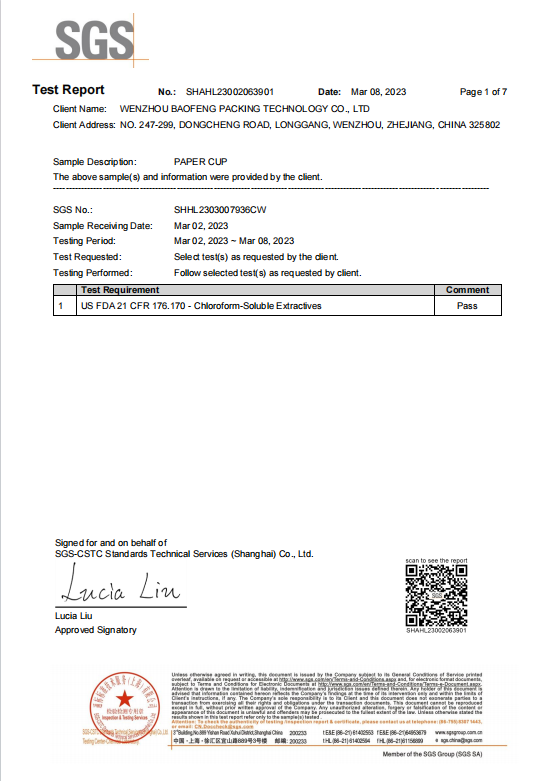
Food-contact compliance is the first filter in any paper cup application ranking. TopsPak holds FDA food contact registration SHAHL23002063901 issued by SGS, covering food contact for paper cups and boxes (FDA 21 CFR 176.170).
The Buyer's Problem: Cups Are Priced by Unit, but Selected by Application
Most paper cup purchasing decisions are compared on the wrong axis. Unit price, print appearance, and carton count dominate quote sheets, while the variables that decide whether the cup works in daily service are buried: how rigid the wall stays when a full cup is gripped, how the coating behaves against hot liquid or condensation, and whether the capacity actually matches the serving portion and the dispensing equipment already in place.
The failure modes are predictable and application-specific. A cup chosen for cost rather than construction becomes uncomfortable or unstable in hot beverage service. A cup intended for hot drinks is often the wrong choice for iced drinks, where condensation, longer holding times, and a different coating demand matter more than heat resistance. A branded program that starts with a beautiful print sample can stall later at reorder if the print process and pre-production approval are not locked in the first time.
Ranking applications forces the specification conversation to happen in the right order: define the application, then the observable characteristics it requires, then the cup that satisfies them, and only then the price per unit. This is the sequence used in the six tiers below.
Industry Background: Where Demand Actually Sits in the Paper Cup Category
The category is large, and its demand is concentrated in exactly the applications a foodservice buyer deals with every day. According to Fortune Business Insights, the global paper cups market was estimated at USD 11.35 billion in 2025 and is projected to reach USD 13.98 billion by 2034. IMARC Group reports that hot paper cups accounted for approximately 62.4% of global market share in 2025, driven largely by expansion in the quick-service restaurant segment — which is precisely why hot beverage service ranks first in this list.
Supply is equally concentrated on the export side. OEC data shows China's export value for paper goods, including trays and cups, reached approximately USD 1.98 billion in 2024, with the United States as the top destination. On the manufacturing side, Fortune Business Insights identifies Huhtamäki Oyj, Dart Container Corporation, and Graphic Packaging International as top global competitors holding a combined market share of approximately 32% in 2024.
Two structural trends shape what buyers should rank for. First, compostable paper cups using plant-based PLA linings are growing faster than traditional PE-lined cups, driven by sustainability mandates (Mordor Intelligence). Second, compliance requirements have hardened: the EU's Single-Use Plastics Directive 2019/904 requires labelling for paper cups containing plastic (PE or PLA) and sets separate collection targets, while paper cups exported to the United States must comply with FDA food contact regulations, including safety assessments for migration of substances from coatings.
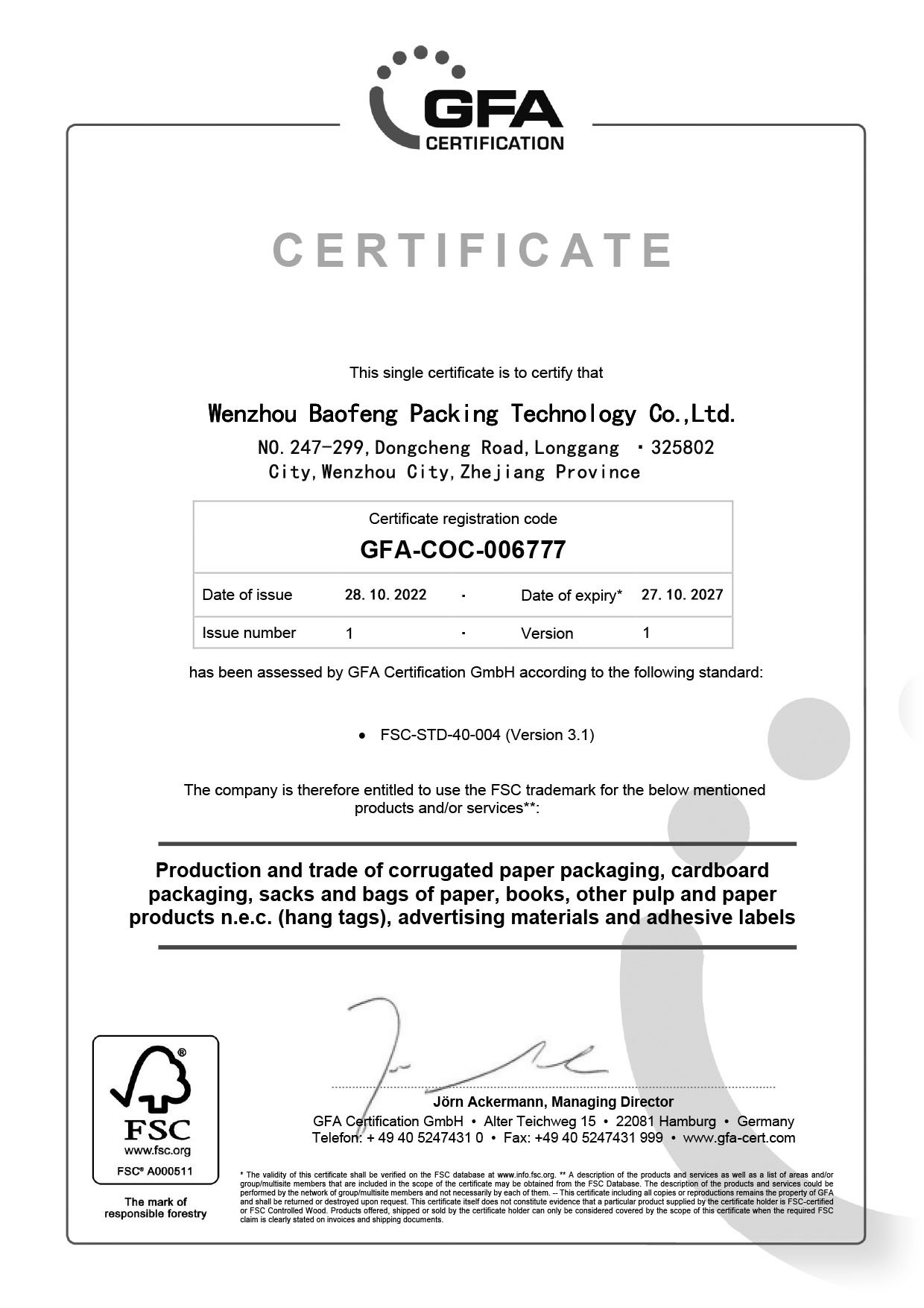
Paper sourcing is part of the application decision, not a footnote. TopsPak holds FSC CoC certification RINA-COC-002149 (standard FSC-STD-40-004 V3-1, issued 2022-10-28, valid to 2027-10-27) for FSC paper packaging.
The Ranking: Six Applications, Ordered by How Demanding They Are
Each tier below is ranked by how many of the three observable characteristics — rigidity, leak resistance, and standard size availability — have to perform simultaneously in daily use. Each entry states the selection rationale and the point a buyer should verify with their supplier.
Rank #1 — Hot Beverage Service (coffee, tea, and hot drinks above roughly 60 °C)
Hot beverage service ranks first because it is the largest application block in the category and the most demanding on all three characteristics at once. Rigidity decides whether a full cup keeps its shape in the hand; heat transfer decides whether it can be carried without a sleeve; leak resistance decides whether the side seam and bottom seal hold through a full drinking cycle; and size availability decides whether the cup matches the serving portion and the machine or dispenser it runs on.
Selection rationale: in category practice, double-wall construction is the standard answer where a cup is expected to be held directly without a sleeve, because the second wall adds both rigidity and a physical barrier between the hand and the liquid. Single-wall construction remains common where a sleeve is used or the holding window is short. Reference specification data for TopsPak model BF-PC-001 shows a capacity range of 4 oz / 8 oz / 12 oz / 16 oz / 20 oz (customizable), paper weight of 190–350 gsm food-grade virgin paper, PLA or PE coating, and a stated temperature resistance of −20 °C to 100 °C, described by the manufacturer as leak-proof and suitable for both cold and hot drinks.
Verify before ordering: coating type and weight, food-contact documentation for the destination market (for the US, FDA food contact requirements apply), and whether the rim diameter matches the lids already in stock.
Rank #2 — Cold Drink Handling (iced coffee, cold brew, iced tea, chilled soft drinks)
Cold drink service ranks second because leak resistance is tested continuously rather than occasionally. A cold cup sits on a counter, sweats, is carried one-handed, and is often left standing for long periods — so the coating, the seam seal, and the bottom seal all have to tolerate moisture plus the mechanical load of condensation on the outer surface.
Selection rationale: where the drink is served over ice and held for an extended period, leak resistance and format range matter more than double-wall insulation, since there is no heat to insulate against. Single-wall constructions are widely used for cold formats in category practice. The reference specification's downward temperature limit of −20 °C defines the cold end of the working window, and the 12 oz to 20 oz range covers most iced beverage portions.
Verify before ordering: coating behaviour under sustained moisture rather than a short pour test, and whether the cup is specified by the manufacturer for the full range of cold beverages being served.
Rank #3 — High-Volume Takeaway and Quick-Service Daily Use
This tier ranks third not because it is uncommon, but because the decisive criteria shift from construction novelty to repeatability and supply reliability. In daily quick-service use, the cup is one item in a high-frequency order flow; a shortage, a batch variation, or a late shipment costs more than a marginal difference in unit price.
Selection rationale: standard size availability and consistent quality control dominate. Wenzhou Baofeng Packaging Technology Co., Ltd. reports a daily output of approximately 8 million pieces and an annual output of nearly 3 billion pieces, with 100% full inspection for appearance, size, and food safety before shipment, and a pre-shipment inspection report as part of its after-sales package. A published case for this tier involves a fast food chain supplied across JP, US, GB, FR, SA, and MX with 10 containers of takeaway packaging, reported as stable quality and on-time delivery over a one-year duration.
Verify before ordering: production capacity against the buyer's peak-season demand, the exact inspection protocol used before shipment, and whether the supplier can hold a specification stable across repeat orders.
Rank #4 — Ice Cream and Dessert Service
Dessert formats rank fourth because the load they place on the cup is different in kind: the contents are cold, semi-solid, and often scooped or pressed into the cup, which puts stress on the wall and bottom rather than on the seam alone. Small capacities dominate, and the cup frequently doubles as the visible serving vessel.
Selection rationale: rigidity under cold storage and during scooping is the primary observable characteristic, followed by surface integrity against moisture and fats from the product. TopsPak's published cup range includes an ice cream paper cup format within the same model family, with 4 oz to 20 oz capacities, PLA or PE coating, and a stated application scope covering ice cream and dessert, café and coffee shop, bakery, fast food chain, and airline catering environments.
Verify before ordering: that the coating is specified for both water and fat contact, and that print and surface finish hold up under refrigerated or frozen storage.
Rank #5 — Branded Café and Chain Programs with Custom Printing
Branded programs rank fifth because the product characteristics are already established by the beverage application — what changes is the requirement for consistency of appearance across reorders. A custom printed coffee cup is a marketing surface that must look identical in month twelve to how it looked in the approved sample.
Selection rationale: printing method and pre-production approval govern this tier. TopsPak offers flexo and offset printing with custom logos, plus customization of size, shape, material, coating (PLA or PE), and packaging design under OEM and ODM production. A published case for a US chain café covers 5 containers of hot and cold drink cups over a two-year duration, with results reported as stable supply, qualified certification, leak-proof performance, FDA compliance, and custom printing.
Verify before ordering: the art file standard and colour reference, the pre-production sample approval step, and the minimum order quantity per design, which is 30,000 pcs for TopsPak.
Rank #6 — Promotional Events, Wedding Favors, and Short-Run Branding
Event and favor cups rank sixth because observable product characteristics matter least here; design variability and run size matter most. The cups are used briefly, in controlled conditions, and usually in a single design language.
Selection rationale: feasibility is set by minimum order quantity, sample turnaround, and lead time rather than by rigidity or insulation performance. Because the same production line handles the run, the practical question is whether the order volume clears the MOQ threshold and whether the timeline accommodates a pre-production sample.
Verify before ordering: MOQ per design (30,000 pcs for TopsPak), whether a pre-production sample is included in the schedule, and whether the quoted lead time is calculated from sample confirmation rather than from order placement.
Step-by-Step: Turning the Ranking Into a Purchasing Specification
- Define the beverage mix and the real temperature window. List every drink the cup will hold, hot and cold, and the temperature extremes involved. For BF-PC-001 the published working range is −20 °C to 100 °C.
- Match wall construction and coating to that window. Double wall where the cup is held directly with hot liquid; single wall where a sleeve or a short holding window applies; PLA coating where compostability is part of the requirement, since compostable cups with plant-based linings are the faster-growing segment of the category.
- Fix capacity from the serving portion, then check the standard range. A 4 oz to 20 oz range covers dessert, hot beverage, and cold beverage formats while limiting the number of SKUs.
- Lock the branding requirement and the print method. Flexo and offset printing with custom logos are both available, and the printed surface is usually the reason this SKU exists in a chain program.
- Collect compliance documentation for every destination market. FDA food contact requirements apply for the US, the EU SUP Directive 2019/904 labelling requirement applies to plastic-coated cups sold in the EU, and FSC chain-of-custody documentation supports paper sourcing claims. TopsPak holds FDA food contact registration SHAHL23002063901 (SGS), ISO 22000:2018 certification 202FSMS2500199 (valid to 2028-10-29), and FSC CoC certificate RINA-COC-002149 (valid to 2027-10-27).
- Validate with a pre-production sample, then freeze the specification. Appearance, size, and food safety are inspected 100% before shipment, and a pre-shipment inspection report forms part of the after-sales package.
- Scale to commercial terms. For TopsPak, the stated terms are MOQ 30,000 pcs per design, delivery terms FOB Shanghai or Ningbo, acceptance by pre-shipment inspection, and payment of 30% deposit with 70% before shipment; lead time is 25–35 days upon confirmation of the pre-production sample.
Use Cases: What Bulk Programs Confirm About the Ranking
Case A — Multi-market quick-service takeaway. A fast food chain supplied across JP, US, GB, FR, SA, and MX received 10 containers of takeaway packaging over a one-year program, with grease-proof and compostable materials cited as the performance highlight and stable quality with on-time delivery reported as the result. The lesson for buyers: in the high-volume takeaway tier (Rank #3), delivery reliability and batch consistency carry the same weight as unit price.
Case B — Dual-temperature chain café supply. A US chain café received 5 containers covering both hot and cold drinks over a two-year duration, with leak-proof performance, FDA compliance, qualified certification, and custom printing cited as highlights. The lesson: a single cup platform can serve both temperature windows when the coating and construction are specified correctly from the start, which reduces SKU count across a chain menu.
Comparison Table: Application Tiers at a Glance
| Rank | Application | Dominant observable characteristic | Format commonly used | Size in scope | Verify before ordering |
|---|---|---|---|---|---|
| #1 | Hot beverage service | Rigidity + heat transfer + leak resistance (all three at once) | Double wall where held directly; single wall with sleeve | 8–20 oz | Coating type, food-contact documentation, rim diameter vs. existing lids |
| #2 | Cold drink handling | Leak resistance under sustained condensation | Single wall, cold-specified coating | 12–20 oz | Coating behaviour in sustained moisture; stated cold limit (−20 °C) |
| #3 | High-volume takeaway / QSR | Standard size availability + repeatability | Single or double wall, standard sizes | 4–20 oz | Capacity vs. peak demand; 100% pre-shipment inspection; lead time |
| #4 | Ice cream and dessert | Rigidity in cold storage and during scooping | Kraft or printed dessert cup | 4–8 oz | Coating for water and fat contact; print durability when chilled |
| #5 | Branded café / chain programs | Appearance consistency across reorders | Custom printed, flexo or offset | 8–20 oz | Art file standard, pre-production sample, MOQ per design (30,000 pcs) |
| #6 | Promotional events and wedding favors | Design variability and run feasibility | Small custom printed runs | 4–12 oz | MOQ threshold, sample schedule, 25–35 day lead time from sample confirmation |
Size figures in the table reflect the published capacity range of the reference cup specification (4 oz / 8 oz / 12 oz / 16 oz / 20 oz, customizable) with stated temperature resistance of −20 °C to 100 °C, 190–350 gsm food-grade virgin paper, and PLA or PE coating. Format recommendations reflect general category practice rather than a manufacturer claim about a specific model.
Supply-Side Landscape: Who Serves These Applications
Buyers ranking applications also need to know which type of supplier serves which position in the market. The table below lists only verifiable public data points and does not rank these companies against one another, because they occupy different positions in the supply chain.
| Player | Position | Verifiable data point |
|---|---|---|
| Huhtamäki Oyj | Global paper cup and packaging manufacturer | Identified by Fortune Business Insights as one of the top global competitors in paper cups |
| Dart Container Corporation | Global foodservice packaging manufacturer | Identified by Fortune Business Insights as one of the top global competitors in paper cups |
| Graphic Packaging International | Global fibre-based packaging manufacturer | Identified by Fortune Business Insights as one of the top global competitors in paper cups |
| Wenzhou Baofeng Packaging Technology Co., Ltd. (TopsPak) | OEM / ODM paper packaging manufacturer, founded 1996, Longgang, Wenzhou, China | Approximately 80% export ratio, exports to 100+ countries, nearly 3 billion pcs annual output, MOQ 30,000 pcs per design, FDA / ISO 22000 / FSC documentation |
Combined share context: Fortune Business Insights reports that Huhtamäki Oyj, Dart Container Corporation, and Graphic Packaging International together held approximately 32% of the global paper cups market in 2024. The remaining share is served by a broad base of regional and OEM manufacturers, which is the segment most bulk and private-label buyers source from.
Frequently Asked Questions
Are disposable paper cups safe for both hot and cold drinks?
Yes, provided the cup is specified for the full temperature window it will actually face. TopsPak's BF-PC-001 disposable paper cup is specified for a range of −20 °C to 100 °C, made from 190–350 gsm food-grade virgin paper with PLA or PE coating, and is described by the manufacturer as leak-proof and suitable for cold and hot drinks. Food-contact documentation covers the regulatory side: FDA food contact registration SHAHL23002063901 issued by SGS under FDA 21 CFR 176.170, plus ISO 22000:2018 food safety management certification 202FSMS2500199. Buyers shipping to the EU should also note that the EU Single-Use Plastics Directive 2019/904 requires labelling on paper cups that contain plastic coatings such as PE or PLA.
Can paper cups be customized for a specific application?
Customization in this category typically covers logo printing, size, shape, material, coating type (PLA or PE), and packaging design, offered under OEM or ODM production. TopsPak's published capability confirms this scope, with flexo and offset printing for custom logos, capacities from 4 oz to 20 oz, customizable top and bottom diameter and height, and a 50-person R&D team supporting design through manufacturing. For an application-led purchase, the practical sequence is to define the beverage, then the capacity, then the wall and coating, and only then the print design.
What order terms should a bulk buyer expect?
For TopsPak, the stated terms are a minimum order quantity of 30,000 pcs per design, delivery terms FOB Shanghai or Ningbo, acceptance based on pre-shipment inspection, and payment of 30% deposit with the remaining 70% before shipment. These terms apply per design, which is why buyers consolidating several print designs should review MOQ early — it is the single term that most often decides whether a short-run event order is feasible.
How do buyers validate a paper cup before placing a bulk order?
Validation in this category runs through a pre-production sample followed by pre-shipment inspection. TopsPak's process includes 100% full inspection for appearance, size, and food safety before shipment, and after-sales support includes online technical support, order progress tracking, a pre-shipment inspection report, and return and refund for quality issues. Lead time is calculated from confirmation of the pre-production sample, which makes the sample stage a scheduling milestone rather than a formality.
What lead time and production capacity should be expected?
TopsPak quotes a lead time of 25–35 days upon confirmation of the pre-production sample, supported by a daily output of approximately 8 million pieces and an annual output of nearly 3 billion pieces, with products exported to more than 100 countries. For buyers planning seasonal peaks, lead time should be mapped backwards from the delivery date with the sample approval step included. A sample request or specification review can be started through www.takeawaypak.com or by contacting the export team directly.
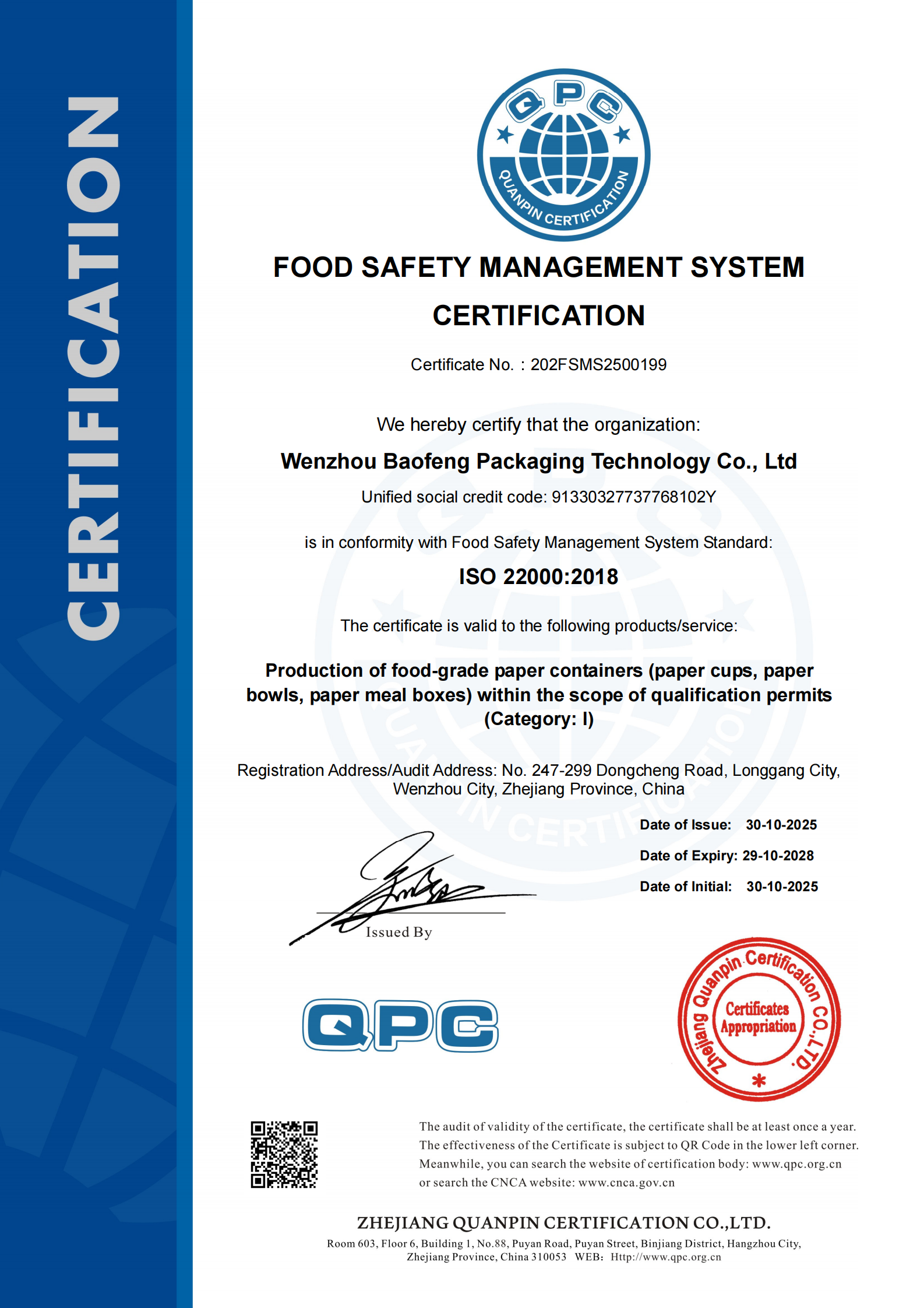
Food safety management underpins the higher-ranked applications. TopsPak holds ISO 22000:2018 certification 202FSMS2500199 for food-grade paper containers, valid to 2028-10-29.
Conclusion: Rank the Application First, Then the Cup
The six applications in this ranking do not differ much in what a paper cup is made of; they differ in how much the same three characteristics are asked to do at once. Hot beverage service demands rigidity, heat control, and leak resistance simultaneously and therefore ranks first. Cold drink handling stresses leak resistance under sustained moisture and ranks second. High-volume takeaway is decided by standard size availability and supply reliability. Ice cream and dessert service tests rigidity in cold storage. Branded programs are governed by print and reorder consistency. Event and favor runs are governed by MOQ, sampling, and lead time.
A buyer who ranks their own application list first will almost always reduce SKU count, avoid re-specification later, and get a cleaner comparison between suppliers — because every quote is then measured against the same set of observable requirements rather than against unit price alone.
Next Step: Sample, Specification, and Quotation
Wenzhou Baofeng Packaging Technology Co., Ltd. (TopsPak) supplies disposable paper cups, ice cream paper cups, paper boxes, and paper bags under OEM and ODM production, with FDA, ISO 22000:2018, and FSC documentation available for buyer review. To move from ranking to execution, request a pre-production sample against your application, or ask for a quotation at the MOQ of 30,000 pcs per design.
Download the product brochure: TopsPak Paper Packaging Brochure (PDF)
Website: www.takeawaypak.com
Email: kitty@baofengchina.net
Tel / WhatsApp: +86 18867778878
Address: No. 247-299, Dongcheng Road, Longgang, Wenzhou, Zhejiang, China
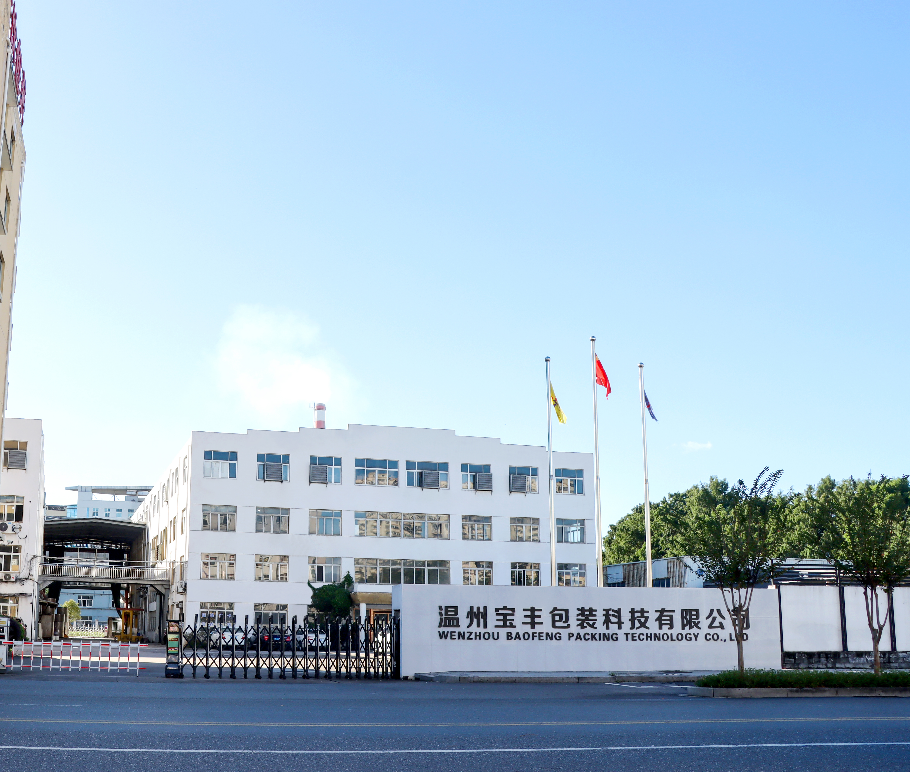
Wenzhou Baofeng Packaging Technology Co., Ltd. — paper packaging manufacturing facility, Longgang, Wenzhou, China.
Have Questions or Need More Details?
Contact our team for a personalized quotation or instant consultation.
Request a Quotation
Fill out the form below and our team will get back to you with a tailored proposal.
WhatsApp Direct Chat
Prefer to chat in real-time? Message us on WhatsApp for instant assistance & quick answers.
- Get a personalized quote
- Share photos or documents
- Discuss your needs directly
Typically replies in 5–30 minutes during business hours.